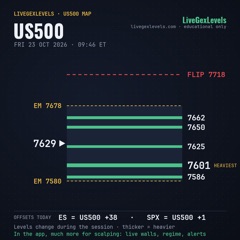
Shorts
Who Moves the Price? The Wall That Gets Lighter
 Play the video · 1:29
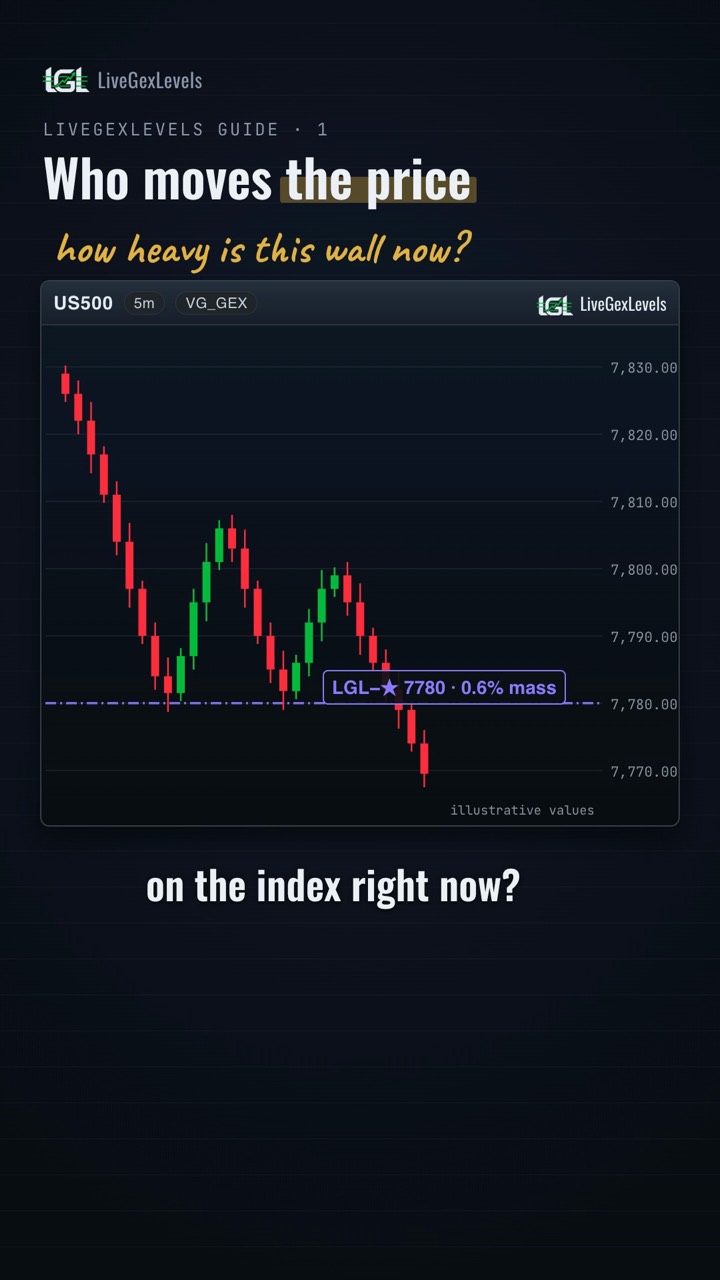
The price stops at the same level twice, then runs straight through. Behind it: the dealers' hedging, and a wall that gets lighter at every touch.
On LiveGexLevels you see these walls on the index during the session, each with its weight, and with a click on a wall you see how its weight changes, minute by minute.
For information only. Not financial advice or an investment recommendation. Trading involves risk of loss. Risk disclosure ↗︎
Transcript
Show the full transcript
The narration of the video, as text.
Price stalls at the same level once, then again, and one day it runs straight through. It isn't your indicators, and it isn't yesterday's high. Someone has to trade at that price. Who, and why?
On the other side there is usually a market maker: the dealer. Whether you buy an option or sell one, the dealer doesn't want to bet on the direction. So the position is hedged, by buying or selling the underlying in the right amount.
Where many options sit on the same strike, the hedging piles up. That price becomes a level, and when it's heavy, we call it a wall. It's an estimate from a model, not an order in the book.
The first two times, the price came down onto a heavy wall, made of options the dealers had bought. But between one touch and the next, positions were being closed, and the wall kept getting lighter. On the third touch, there was almost nothing left to hedge. The dealers no longer had to buy, and the price went straight through. So that's the answer to our opening question — the dealers, and their hedging.
On LiveGexLevels you answer exactly this question, during the session: how heavy is this wall on the index right now? Each wall shows its weight, and with a click you see how it changes, minute by minute.
The full episode, who moves the price, is on our channel.